


What kind of pepper is it?
The peperone crusco is not just any old variety of pepper, nor a simple cooking ingredient. It is the result of an ancient balance between territory, climate, handed-down gestures and slow times. In Basilicata, and particularly in the Senise area, the 'peperone crusco' is part of everyday life, memory and local gastronomic identity.
To understand what type of pepper the 'peperone crusco' is means to enter the heart of Lucanian peasant culture, where nothing is casual and every step - from cultivation to processing - has a precise meaning.
What is the crusco pepper
The peperone crusco is a dried sweet pepper, typical of Basilicata, obtained almost exclusively from the PGI Senise pepper. It is therefore not a species in itself, but the result of a traditional processing which transforms a fresh pepper into a dry, crispy product with an intense and recognisable flavour.
The Word crusco comes from the Lucanian dialect and means “crunchy”. It is this characteristic, together with its bright red colour and delicate fragrance, that makes it unique among typical Italian products.
From which pepper comes the peperone crusco
The Peperone di Senise PGI
The crusco pepper originates from the PGI Senise pepper, a local variety selected over time to adapt perfectly to the climate of the Sinni valley. It has an elongated shape, thin skin, sweet flesh and very few seeds.
These characteristics make it ideal for natural drying:
- the thin peel dries quickly
- the pulp does not become bitter
- the flavour remains sweet even after processing
It is the same pepper used by Lucanian farms such as Tenuta Padì, which cultivate with respect for seasonality and the short supply chain, without forcing.
👉 Dried Cruschi Peppers of Senise PGI for frying
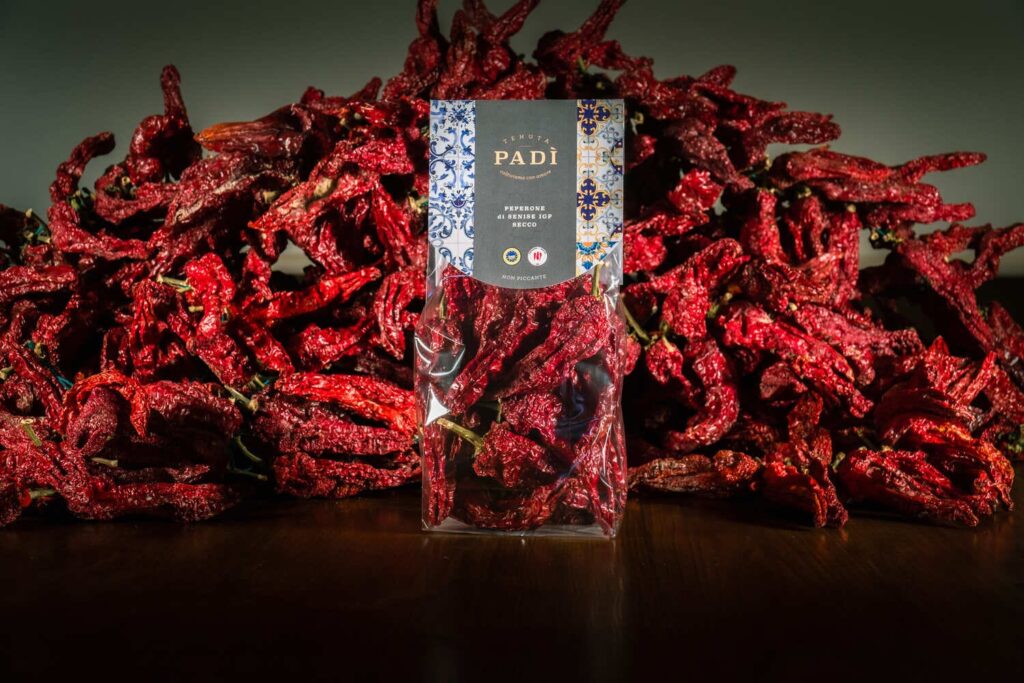
Why the crusco pepper is different from other dried peppers
Not all dried peppers become cruschi. The difference lies not only in the variety, but especially in the method of processing.
Slow and natural drying
After manual harvesting, the peppers are tied in long necklaces, called serte, and exposed to the air and sun. There are no industrial ovens or forced dryers. Time does its work, slowly.
This phase can last several weeks and allows the pepper to:
- losing water gradually
- concentrating sugars and flavours
- maintain the deep red colour
It is a process that requires daily attention and knowledge of the climate, because humidity and wind make all the difference.
When a pepper becomes “crusco”
The dried pepper becomes crusco only at the time of use, thanks to a very fast frying in hot oil. It only takes a few seconds: the pepper swells, becomes very light and gives off an unmistakable aroma.
This final step does not serve to cook it, but to enhance its structure. It is here that the dried Senise pepper reveals its full identity.
For those who prefer a ready-made product, there are handcrafted versions ready to be fried in extra virgin olive oil.
👉 Serta or necklace of PGI Senise Cruschi peppers
What does bran pepper taste like
One of the most surprising aspects of the crusco pepper is its taste. It is not spicy, it is not aggressive, it does not cover the other ingredients.
The flavour is:
- sweet
- slightly toasted
- aromatic
- clean
The crunchiness adds a sensory dimension that few other ingredients can offer. This is why it is often used as a finishing touch, rather than as the base of the dish.
How to use the crusco pepper in cooking
A simple, yet identifying ingredient
In Basilicata, the crusco pepper enters the kitchen naturally. No need for complex recipes: just a little is enough to make the most of it.
Some traditional and everyday uses:
- crumbled on pasta with breadcrumbs and oil
- as a seal for cod and eggs
- next to legumes and peasant soups
- broken above bread and extra virgin olive oil
In many Lucanian homes, it is considered in the same way as a spice, but with a much stronger visual and material presence.
The crusco pepper powder
Another traditional way to use the crusco pepper is to reduce it into dust. Simply blend dried or already fried peppers to obtain a bright red, fragrant, natural seasoning.
Crusco pepper powder is ideal for:
- adding flavour to soups and stews
- giving colour to doughs and creams
- finishing vegetable or meat dishes
👉 Crusco di Senise IGP pepper powder
The cultural value of the 'peperone crusco' in Basilicata
The crusco pepper is not just food. È seasonality, waiting, repeated gesture. The preparation of the serte, exposure to the sun, and daily inspection are part of a ritual that unites families and marks agricultural time.
Walking through Lucanian villages in late summer, it is easy to see balconies and façades decorated with red pepper necklaces. It is not folklore: it is everyday life.
Tenuta Padì, like other farms in the area, continues to uphold this tradition, respecting natural rhythms and enhancing local knowledge without forcing it.
Why the 'peperone crusco' is a unique product
Its uniqueness does not derive from complex processing, but from the combination of factors that make it unrepeatable elsewhere:
- a specific microclimate
- a local variety selected over time
- a slow transformation
- a consistent gastronomic culture
It is not a product that can be replicated on a large scale without losing identity. And that is what makes it so recognisable and appreciated.
Those who wish to learning more about this tradition immediately realises that there is more behind a 'peperone crusco' than just an ingredient.
An example of tradition that continues
Products such as the taralli with peperone crusco, born from the encounter between peasant recipes and artisanal processing, demonstrate how this ingredient can also dialogue with different forms, without losing authenticity.
👉 Taralli al Peperone Crusco di Senise Igp handmade with Senatore Cappelli durum wheat semolina
These are concrete examples of how a tradition can evolve while remaining true to itself.
FAQ - Frequently asked questions about the 'peperone crusco
What type of pepper is peperone crusco?
It is a dried sweet pepper, obtained mainly from the PGI Senise pepper, processed according to Lucanian tradition.
Is the 'peperone crusco' spicy?
No, it is naturally sweet. Its taste is aromatic but delicate.
Why does it get crispy?
It is fried very quickly in hot oil, which enhances its texture without actually cooking it.
Can it be used without frying it?
Yes, mostly powdered or crumbled, but frying is what makes it “crusco”.
How do you store the 'peperone crusco'?
Dry, in a dry place; already fried or in oil, following the manufacturer's instructions.
Understand what type of pepper is peperone crusco means recognising the value of an agricultural tradition that has chosen quality, time and territory as its only true ingredients. Deepening this culture also means rediscovering a more conscious way of being at the table.
