


Those who approach Lucanian cuisine for the first time often ask themselves this question, perhaps with some trepidation: is the crusco pepper spicy?
The answer, simple and reassuring, is no. The crusco pepper is not spicy. It is sweet, fragrant, delicate. But to really understand why, we need to take a step back and tell you what it is, where it comes from and what this symbolic product of Basilicata represents.
What is the crusco pepper
The peperone crusco stems from the PGI Senise pepper, a sweet variety cultivated historically along the Sinni valley in Basilicata. It is a pepper with a thin skin, light flesh and very little water: fundamental characteristics that make it perfect for natural drying.
The term crusco in Lucanian dialect means crunchy. And this is precisely its peculiarity: after slow drying and very fast frying in hot oil, the pepper becomes light, crumbly, almost impalpable, while maintaining a sweet, clean flavour.
It is not an industrially processed product, but the result of an ancient agricultural practice, handed down from family to family.
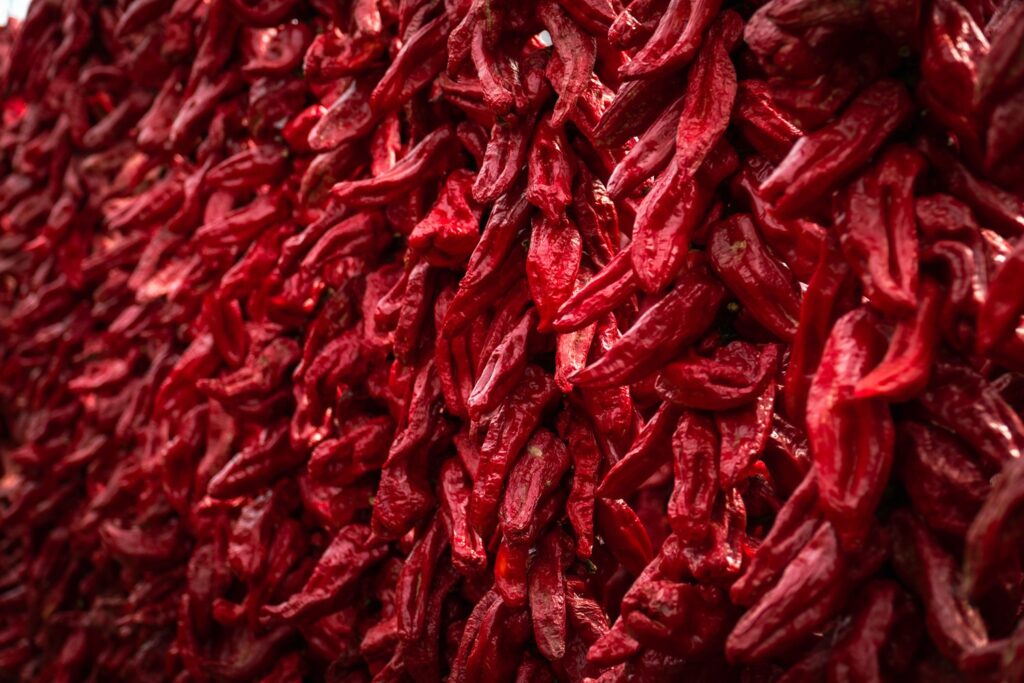
Is the 'peperone crusco' spicy? The clear answer
No, it is not spicy
The crusco pepper does not contain capsaicin, the substance responsible for the spicy sensation in chillies. It belongs to the sweet peppers, not to that of chillies.
Those who taste it for the first time are often surprised: the deep red colour and appearance are reminiscent of dried chilli peppers, but the taste is completely different on the palate. È sweet, aromatic, with light vegetable notes and a fragrance that is especially noticeable after frying.
Why then is it confused with chilli?
The confusion stems from three elements:
- the bright red colour
- the elongated shape
- the fact that it is dried
But the crusco pepper does not “pinch”, it does not burn or cover up the other flavours. On the contrary, it accompanies and enhances them.
The taste of the crusco pepper: what to expect
Natural sweetness and intense fragrance
The flavour of the crusco pepper is delicate but recognisable. The sweetness is natural, never cloying, with an aroma reminiscent of fresh peppers concentrated by the sun.
When fried properly, it releases a warm, enveloping aroma that lingers in the mouth without becoming heavy.
Unique crunchiness
The true signature of the 'peperone crusco' is the crunchiness. It is not hard, it is not dry: it is crumbly. It breaks between the fingers and melts in the mouth. It is this characteristic that makes it so versatile in the kitchen.
How the crusco pepper is made: slow times and tradition
From harvesting to “serte”
In Basilicata, the pepper harvest takes place between August and September. The fruits are selected by hand and tied one by one in long necklaces called serte, which are hung in the air, often on balconies or under porches.
Here, the weather does its job: sun, wind and patience. No forcing, no rapid drying.
Craftsmanship that makes the difference
It is precisely this slowness that makes the crusco pepper so different from industrial alternatives. Natural drying preserves:
- the colour
- the scent
- the original sweetness of the pepper
Lucanian agricultural realities such as Tenuta Padì continue to respect these rhythms, keeping alive a tradition that does not seek shortcuts and that focuses on the raw material and the territory.
How to use the crusco pepper in cooking
Fried, in its most authentic form
The most traditional way to enjoy it is fried for a few seconds in extra virgin olive oil. It only takes a moment: the pepper swells slightly, becomes crispy and should be removed from the heat immediately.
Thus prepared, it is perfect:
- as a snack
- as a side dish
- as a seal
I Cruschi di Senise IGP whole peppers in glass, already fried were born precisely for this use, respecting Lucanian tradition.
Crumbled on plates
One of the most popular uses in Basilicata is crumble the crusco pepper on:
- pasta dishes
- salt cod
- eggs
- legume soups
It adds crunch and aroma without altering the balance of the dish.
In powder form, as a sweet spice
The crusco pepper can be ground into a powder and used as a seasoning. The Crusco di Senise IGP pepper powder is an example of how tradition can become an everyday gesture in the kitchen.
It is ideal for:
- flavouring soups
- flavouring potatoes and vegetables
- giving colour and fragrance to simple dishes
Peperone crusco and Lucanian cuisine: a deep bond
In Basilicata, the crusco pepper is not a gastronomic fad, but an identity ingredient. It is present at festivals, at family dinners, in recipes handed down by word of mouth.
The signature dish is undoubtedly salt cod and cruschi peppers, a preparation that combines sea and land, simplicity and character. But it can also be found with pasta, with scrambled eggs, even broken up on warm bread.
Knowing it means learning more about this tradition, made up of simple gestures and respect for seasonality.
Why the crusco pepper is different from industrial products
Without aggressive comparisons, the difference is all in the care:
- in manual selection
- in natural times
- in craftsmanship
A slowly obtained crusco pepper maintains its identity, fragrance and taste. It is a product that does not need to be corrected or masked.
Products such as the Crunchy peppers in a bag tell precisely this approach: essential, respectful, linked to the territory.
A simple ingredient, but never banal
The peperone crusco is not spicy, but it has character. It does not overpower, but it is remembered. It is an ingredient that teaches you something fundamental about Lucanian cuisine: the power of simplicity.
Those who discover it for the first time often use it cautiously, then learn to recognise its value and incorporate it naturally into their cooking. It is worth deepen this knowledge, because behind a simple gesture there is a whole world.
FAQ - Frequently asked questions about the 'peperone crusco
Is the crusco pepper spicy or sweet?
It is sweet. It contains no capsaicin and does not cause any sensation of spiciness.
Is the 'peperone crusco' also suitable for children?
Yes, precisely because it is not spicy and has a delicate taste.
Why does the “crusco” pepper 'crack'?
Its thin skin and natural drying make it crispy after frying.
Can it be eaten without frying it?
Yes, it can be crumbled dry or used in powder form, although frying enhances its aroma and texture.
Is the 'peperone crusco' a chilli pepper?
No. It is a sweet pepper typical of Basilicata, different from hot peppers.
The crusco pepper is a gentle response to those seeking authentic flavours without excess. It is not spicy, but tells of a land, a culture and a way of farming that deserve to be known, calmly and respectfully.
